
Drone Remote Control / Video Transmission Terminal – Industry Customization Case Study
I. Industry Background
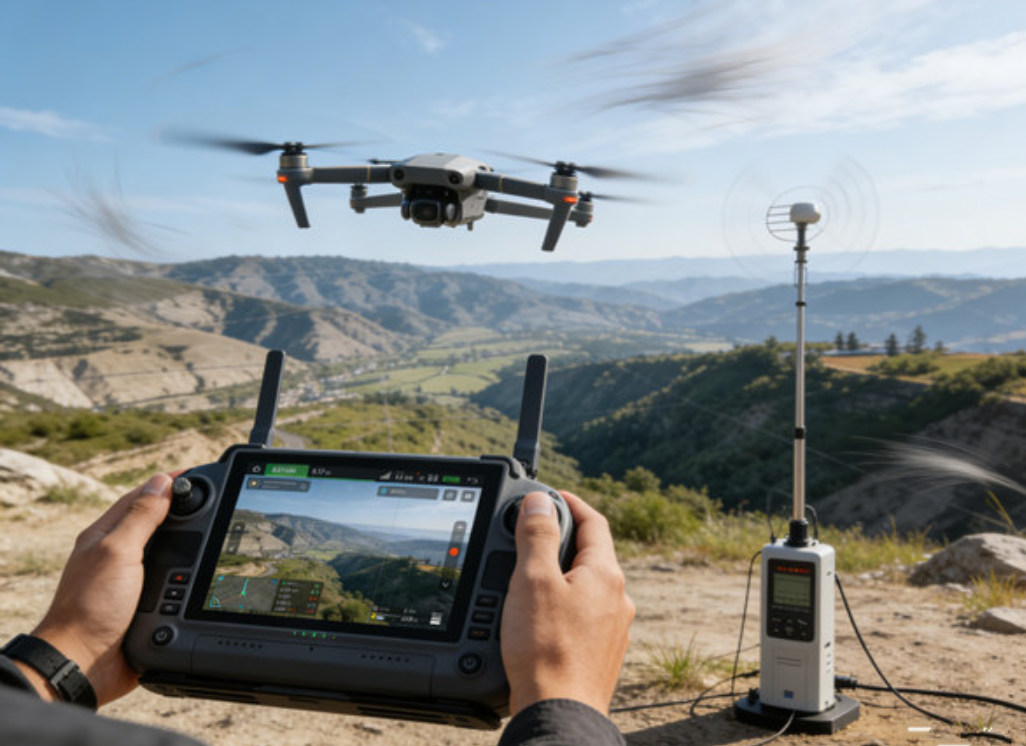
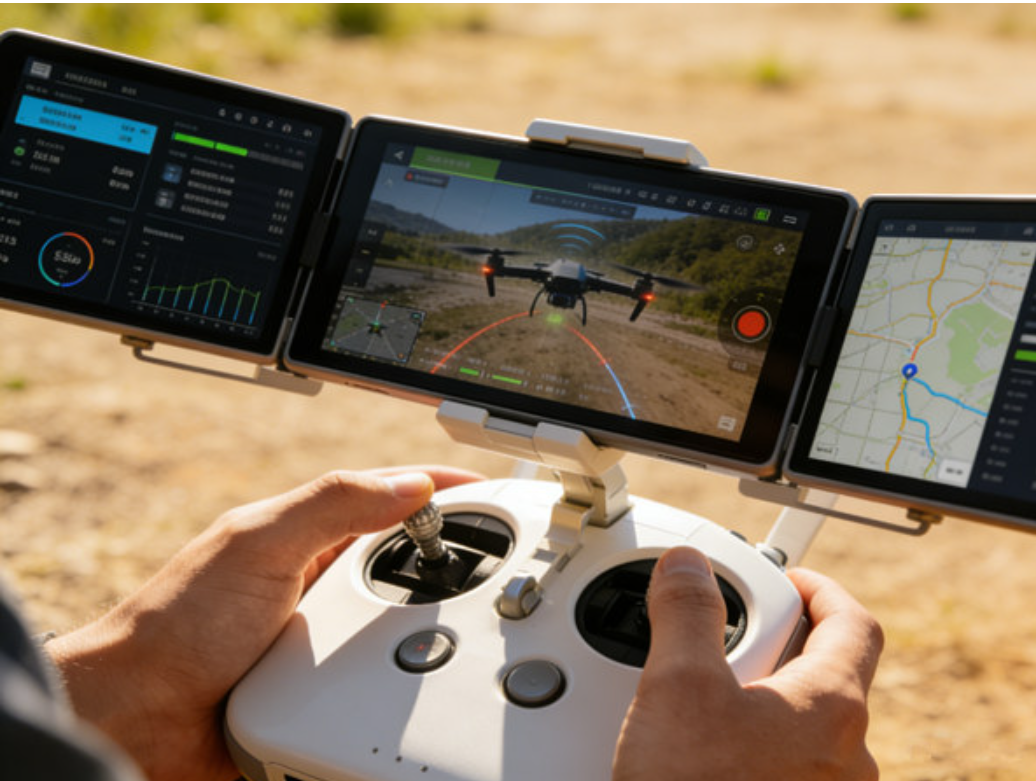
With the rapid advancement of drone technology, unmanned aerial vehicles (UAVs) are being widely adopted across various industries, especially in aerial photography, environmental monitoring, agricultural surveying, and more. As core components for flight control and data transmission, drone remote controllers and video transmission terminals play a critical role in ensuring flight safety, real‑time monitoring, and reliable data delivery.
However, increasingly complex outdoor operating environments and rising user expectations have exposed the limitations of traditional remote terminals under extreme conditions. In areas such as high‑brightness sunlight exposure, long operating hours, high‑resolution display, and low‑latency image transmission, drone remote terminals must offer stronger display performance and environmental adaptability. Problems such as poor screen readability under direct sunlight, dark display when wearing polarized sunglasses, high power consumption, and severe heat generation have become industry bottlenecks. Developing remote/video transmission terminals that deliver high brightness, high resolution, and low latency has therefore become a critical challenge that the industry urgently needs to solve.
II. Industry Pain Points
1. Screen Unreadable Under Direct Sunlight
Drone remote terminals are frequently used outdoors. Under strong sunlight, conventional screens become difficult or impossible to read, affecting control accuracy and flight safety.
2. Screen Darkens When Using Polarized Sunglasses
In bright environments, many operators wear polarized sunglasses to reduce glare. However, this often causes the screen to appear black or blurry, severely degrading image quality and the user experience.
3. Power Consumption and Heat Generation Caused by High Resolution
As image resolution increases, the terminal must process more display data. This not only raises power consumption but may also lead to overheating, which affects system stability and service life – particularly during long‑duration missions.
4. Stability During Long Outdoor Operations
Drone operations often take place in varying ambient temperatures. Traditional remote terminals may suffer from display anomalies and shortened battery life under extreme temperatures (cold or hot), affecting operational continuity and reliability.
III. Solutions
To address the pain points above, our company has launched a series of customized drone remote control / video transmission terminal solutions, focusing on display performance, power management, and device stability to meet the demands of high‑intensity outdoor operations.
1. Common Display / Touchscreen Parameters for Drones
5‑inch 1080×1920, brightness 2800 cd/m²
Widely used in drone flight controllers and handheld devices. Provides clear flight data, navigation, and real‑time video. High resolution and compact design ensure readability under strong sunlight, improving pilot experience and safety. Suitable for small and medium‑sized UAVs.7.02‑inch 1200×1920, brightness 2000 cd/m²
Ideal for drone control systems and monitoring stations. Displays flight parameters, maps, and high‑definition video. Widely used in agriculture, surveying, and mapping. The larger size and high resolution enhance data visualization, helping operators make more precise decisions.10.1‑inch 1200×1920, brightness 2000 cd/m²
Used in high‑end drone ground control stations and flight panels to show flight status, real‑time video, and sensor data. Suitable for industrial‑grade and emergency‑response UAVs. Provides an intuitive visual experience, improving operational efficiency and safety.
Our three display terminals meet different size requirements, delivering high‑definition imaging and high brightness output to ensure clear visibility even under direct sunlight.
2. High‑Brightness Display
The products support 2000–3000 nits of high‑brightness output, ensuring the screen remains clearly visible under direct sunlight, providing users with a better operating experience.
3. Polarized Sunglasses Compatibility
Specially designed to work with polarized sunglasses, our display solution eliminates the “black screen” issue when wearing polarized lenses, keeping the display clear and readable at all times.
4. Power Consumption & Heat Optimization
Low‑power design – Advanced low‑power technology optimizes battery management and display technology, minimizing power consumption and extending device runtime.
Thermal design – To address heat generation caused by high resolution and long operating hours, we have implemented efficient heat dissipation solutions, ensuring stable operation under high load and preventing performance degradation due to overheating.
5. Reliability & Stability
Long‑term use at high brightness – Our products use advanced LCD technology that enhances display panel durability, ensuring no brightness decay or color distortion during prolonged high‑brightness operation. We have also conducted extended continuous‑operation simulations to confirm that the system can withstand the high demands of long drone flights.
Outdoor temperature tolerance – Our products undergo rigorous testing to operate reliably across a temperature range of -20°C to +60°C. Whether in extremely cold or hot environments, our terminals adapt to temperature variations. Precision design and high‑quality materials ensure stable operation under extreme temperatures.
Conclusion
Through in‑depth analysis of industry pain points, we provide a complete set of customized solutions for drone remote control / video transmission terminals. We have optimized and innovated across areas including direct sunlight readability, high‑resolution requirements, polarized sunglasses compatibility, power consumption, heat management, and temperature tolerance – ensuring stable and reliable operation under a wide range of extreme conditions.
Our drone remote control / video transmission terminal solutions not only enhance operator experience but also provide solid hardware support for efficient and stable drone operations across the industry.
 AI Robot Industry – Customizat
 Drone Remote Control / Video T
 Transflective Display